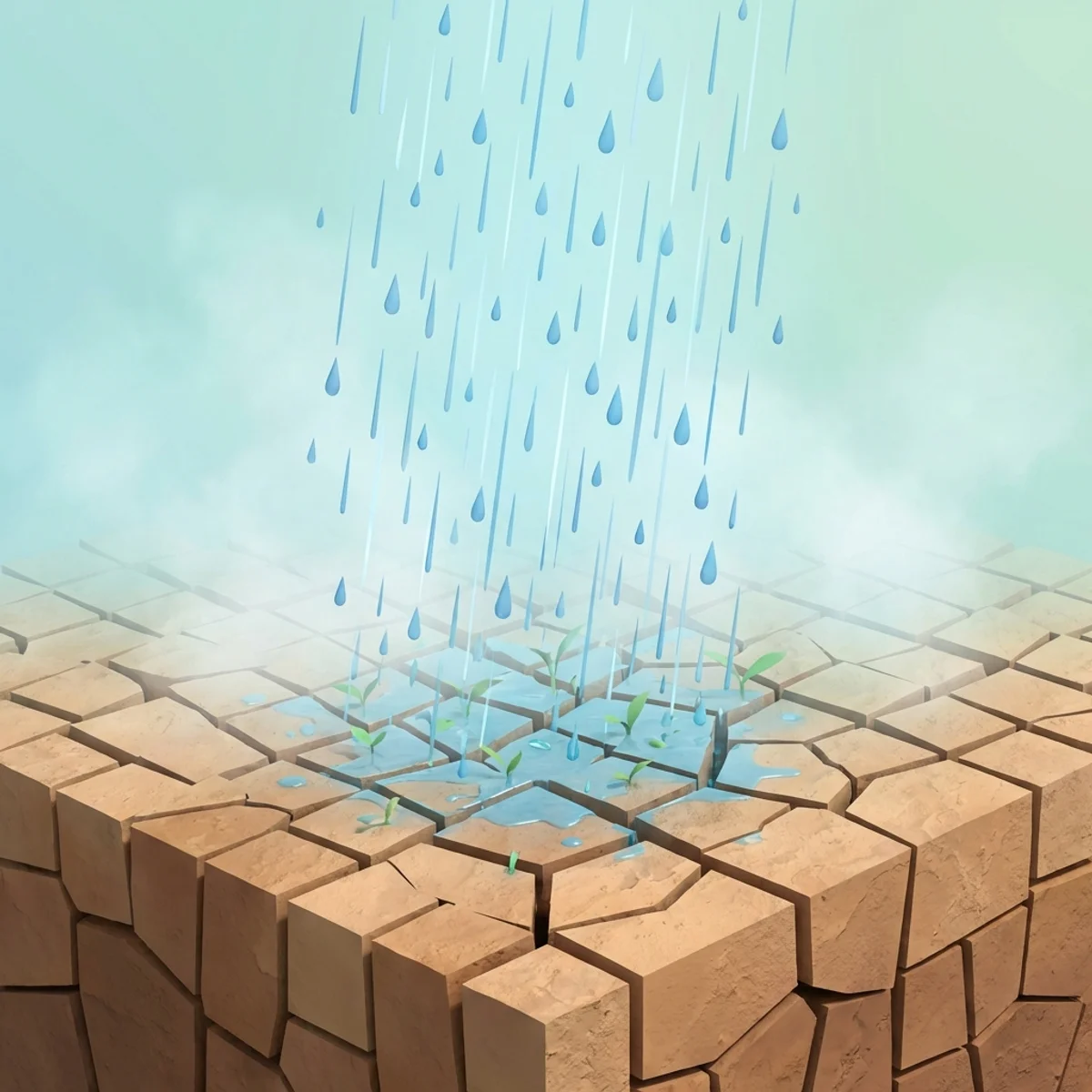
The Smell of Rain (Petrichor): Nature’s Chemical Signal
You step outside just as the first heavy drops of a summer storm hit the hot pavement. A distinct, earthy, fresh aroma fills the air. It’s universally pleasant, triggering a sense of relief and primal connection to nature. But why does water, which is odorless, smell so good when it hits the ground?
It turns out, you aren’t smelling the rain itself. You are smelling a complex chemical cocktail released by the earth, communicating a signal that your ancestors depended on for survival.
Petrichor: The Blood of the Gods
The term ‘Petrichor’ was coined in 1964 by Australian researchers to describe the fluid released from rocks and soil during rainfall, combining the Greek ‘petra’ (stone) and ‘ichor’ (the fluid that flows in the veins of the gods).
Before 1964, there was no scientific name for this scent, though it had been perfumed in Kannauj, India, for centuries as matti ka attar (earth perfume). The scent consists of plant oils that accumulate in dry periods and, crucially, a chemical called different Geosmin. When rain hits dry soil, air bubbles trap these compounds and burst upwards like microscopic champagne aerosols, delivering the scent to our noses.
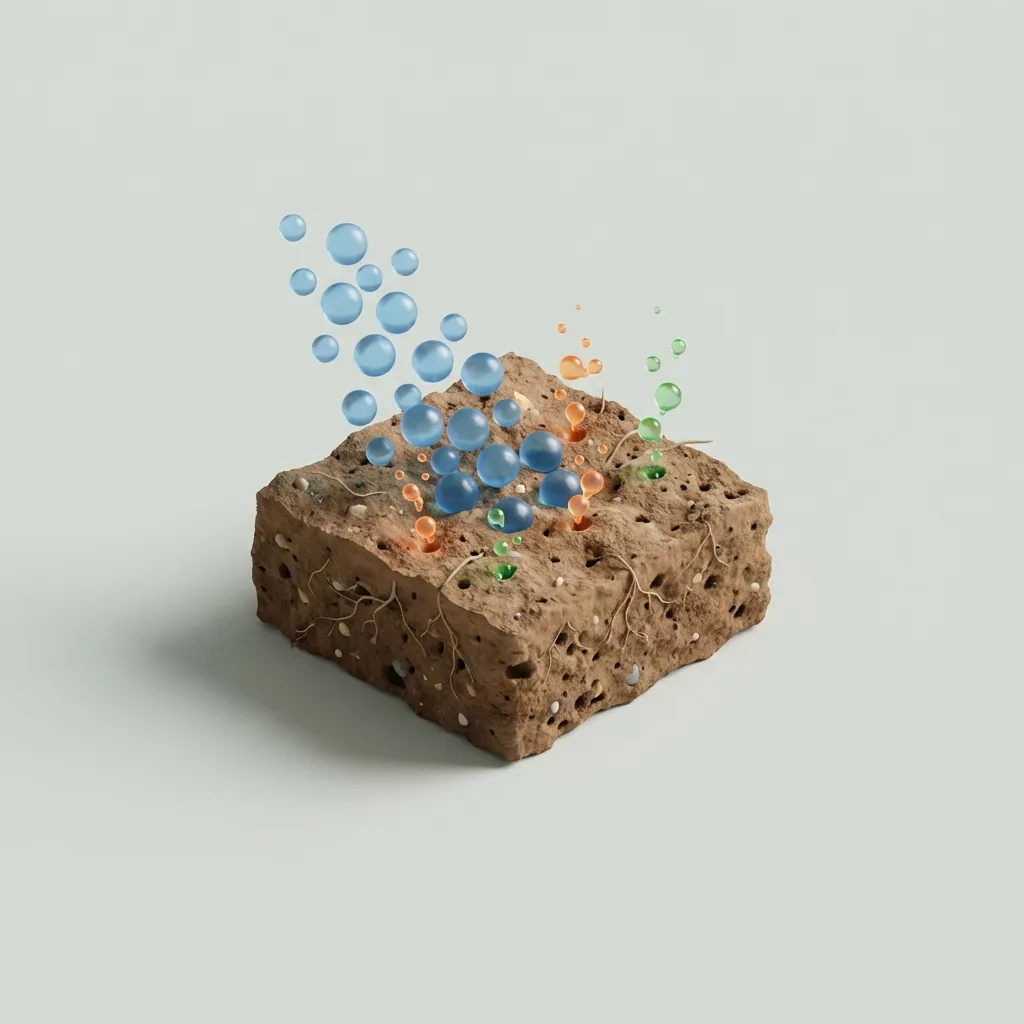
Geosmin: The Earth Perfume
The primary component of the rain smell is Geosmin, a bicyclic alcohol produced by Streptomyces soil bacteria when they die or produce spores.
It sounds unappealing (smelling dead bacteria byproduct), but it is the literal scent of fertile earth. When the soil dries out, these bacteria produce spores to survive. The force of rain landing on the ground kicks these spores up into the air. The “moist earth” smell is actually the chemical signature of billions of soil microorganisms waking up.
This explains why the smell is strongest after a long dry spell; the bacteria have had time to build up a massive reserve of spores and geosmin, waiting for the trigger of water to release them.
The Human Superpower: Sensitive as a Shark
Humans are hyper-sensitive to Geosmin, capable of detecting it at concentrations as low as 5 parts per trillion, making us significantly more sensitive to the smell of wet earth than a shark is to the smell of blood.
This is one of the most astounding facts in human sensory biology. To put 5 parts per trillion in perspective, it is equivalent to detecting a single drop of scent in an Olympic-sized swimming pool. Our olfactory receptors are specifically tuned to this molecule. While we generally have a poor sense of smell compared to dogs or bears, we are chemical superstars when it comes to the smell of impending rain.

Why Do We Love It? The Evolutionary Advantage
Our intense positive reaction to the smell of rain is likely an evolutionary adaptation; for early humans in arid environments, detecting rain from miles away meant locating water, game, and survival.
Evolution doesn’t often keep features that don’t serve a clear purpose. Our hypersensitivity to Geosmin suggests that “following your nose” was a literal survival strategy. Early hominids who could smell a storm across the savannah could find water before it evaporated or track animals that were also moving toward the moisture.
Today, that deep, relaxing feeling you get when you smell rain is a genetic echo. It’s your brain rewarding you with a hit of dopamine for successfully finding the most precious resource on the planet: fresh water.