
Everyday Science Articles

Explore our collection of articles about everyday science

The Smell of Rain (Petrichor): Nature's Chemical Signal
Everyday Science

The Smell of Rain (Petrichor): Nature's Chemical Signal

The scent of rain, 'Petrichor', primarily comes from Geosmin, a chemical byproduct of soil bacteria. Humans are hypersensitive to it, detecting it at 5 parts per trillion—more sensitive than a shark is to blood—likely an evolutionary trait for finding water.

Why do we love the smell of rain? It's not just nostalgia. Discover the evolutionary biology and chemistry behind Petrichor and Geosmin, the scent humans are more sensitive to than sharks are to blood.

January 11, 2026 By Priya Sharma
Why Earphones Always Tangle (Knot Theory)
Everyday Science

Why Earphones Always Tangle (Knot Theory)

Spontaneous knotting is mathematically inevitable for any cord longer than 46 centimeters. As a cord tumbles, there are thousands of ways it can cross over itself to form a knot, but only one way for it to remain untangled. Entropy always favors chaos.

It's not bad luck. It's physics. Discover the mathematical 'Knot Theory' that proves any cord longer than 46cm will spontaneously tangle itself.

January 11, 2026 By Priya Sharma
Why Coffee Tastes Bad on Airplanes (And Different in Denver)
Everyday Science

Why Coffee Tastes Bad on Airplanes (And Different in Denver)

Coffee tastes wildly different at altitude because physics changes the rules of brewing. Atmospheric pressure drops, lowering the boiling point of water. This means water literally cannot get hot enough to extract the full flavor from the beans, leading to a sour, weak cup. On airplanes, dry air and noise further suppress your taste buds by 30%.

Why does coffee taste weak at altitude? The lowered boiling point of water leads to under-extraction, while dry cabin air kills your sense of smell.
January 10, 2026 By Priya Sharma
Why Fingers Prune in Water (It's Not Swelling)
Everyday Science

Why Fingers Prune in Water (It's Not Swelling)

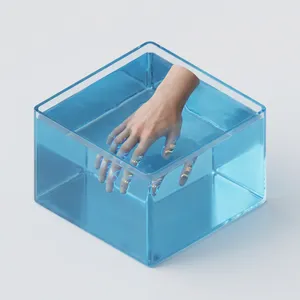
Pruney fingers are caused by the autonomic nervous system, not water absorption. When wet, your nerves trigger blood vessels to constrict, reducing volume in your fingertips. This collapses the skin into specific drainage patterns—like rain treads on a tire—to improve grip on wet surfaces.

Why do your fingers get pruney in the bath? It isn't because they absorb water. It is an active nervous system reaction designed to give you better grip.
January 10, 2026 By Lars Jansen
Why Mint Makes Your Mouth Feel Cold (It's a Chemical Illusion)
Everyday Science

Why Mint Makes Your Mouth Feel Cold (It's a Chemical Illusion)

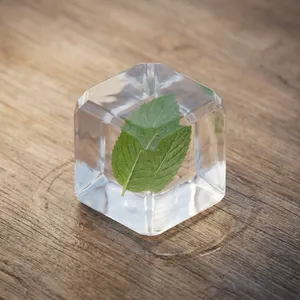
Mint feels cold because menthol molecules chemically bind to the TRPM8 ion channels in your sensory nerves—the same receptors that detect actual cold. By changing the shape of the receptor, menthol lowers its activation threshold, causing it to fire 'cold' signals to your brain even at warm temperatures.

Why does menthol feel cold? It is a sensory trick. Mint hijacks your TRPM8 receptors, lowering their activation threshold so room temperature feels freezing.

January 10, 2026 By Priya Sharma
Why Salt Melts Ice: A Molecular Gang War on Your Driveway
Everyday Science

Why Salt Melts Ice: A Molecular Gang War on Your Driveway

Salt doesn't melt ice by generating heat. It works by 'freezing point depression.' Dissolved salt ions violently insert themselves between water molecules, preventing them from bonding into the crystal lattice structure required to form ice. It is effectively a molecular blockade.

How does rock salt actually melt ice? It isn't heat. It is a molecular invasion called 'freezing point depression' where salt ions block water from bonding.

January 10, 2026 By Priya Sharma
Why Shower Curtains Attack You (The Physics of the Flap)
Everyday Science

Why Shower Curtains Attack You (The Physics of the Flap)

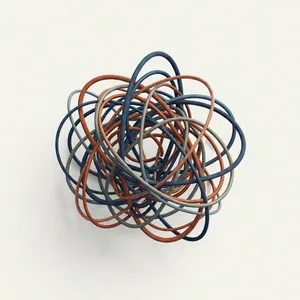
The 'Shower Curtain Effect' is caused by a horizontal vortex. As water spray falls, it drags air with it, creating a spinning cylinder of air (a vortex) inside the shower. The center of this vortex has low pressure, which pulls the flexible curtain inward like a weak vacuum.

Why does the shower curtain blow inward? It isn't just hot air. A horizontal vortex created by the water spray lowers the pressure, sucking the plastic towards you.
January 10, 2026 By Zeynep Demir
The Dust Truth: It’s Not Just Dead Skin (What 50% Actually Is Will Worry You)
Everyday Science

The Dust Truth: It’s Not Just Dead Skin (What 50% Actually Is Will Worry You)

The old adage that "dust is mostly dead skin" is a myth. In reality, household dust is a complex cocktail of outdoor soil, textile fibers, and—more alarmingly—concentrated industrial chemicals like flame retardants and phthalates. Your dust bunnies aren't just biological waste; they are a "toxic reservoir" of your home's modern materials.

Debunking the myth that dust is mostly dead skin. Discover the real composition of household dust, a toxic reservoir of industrial chemicals and pollutants.

January 9, 2026 By Ahmed Al-Sayed