Why Earphones Always Tangle (Knot Theory)
You neatly wrap your headphones. You place them gently in your pocket. Five minutes later, you pull them out, and they have formed a Gordian knot so complex it defies logic.
Is there a pocket gremlin? A cursing hex? No. It is simply the universe following the laws of probability.
In 2007, physicists Douglas Smith and Dorian Raymer proved that string doesn’t just get tangled; it wants to get tangled.
The Spontaneous Knotting Experiment
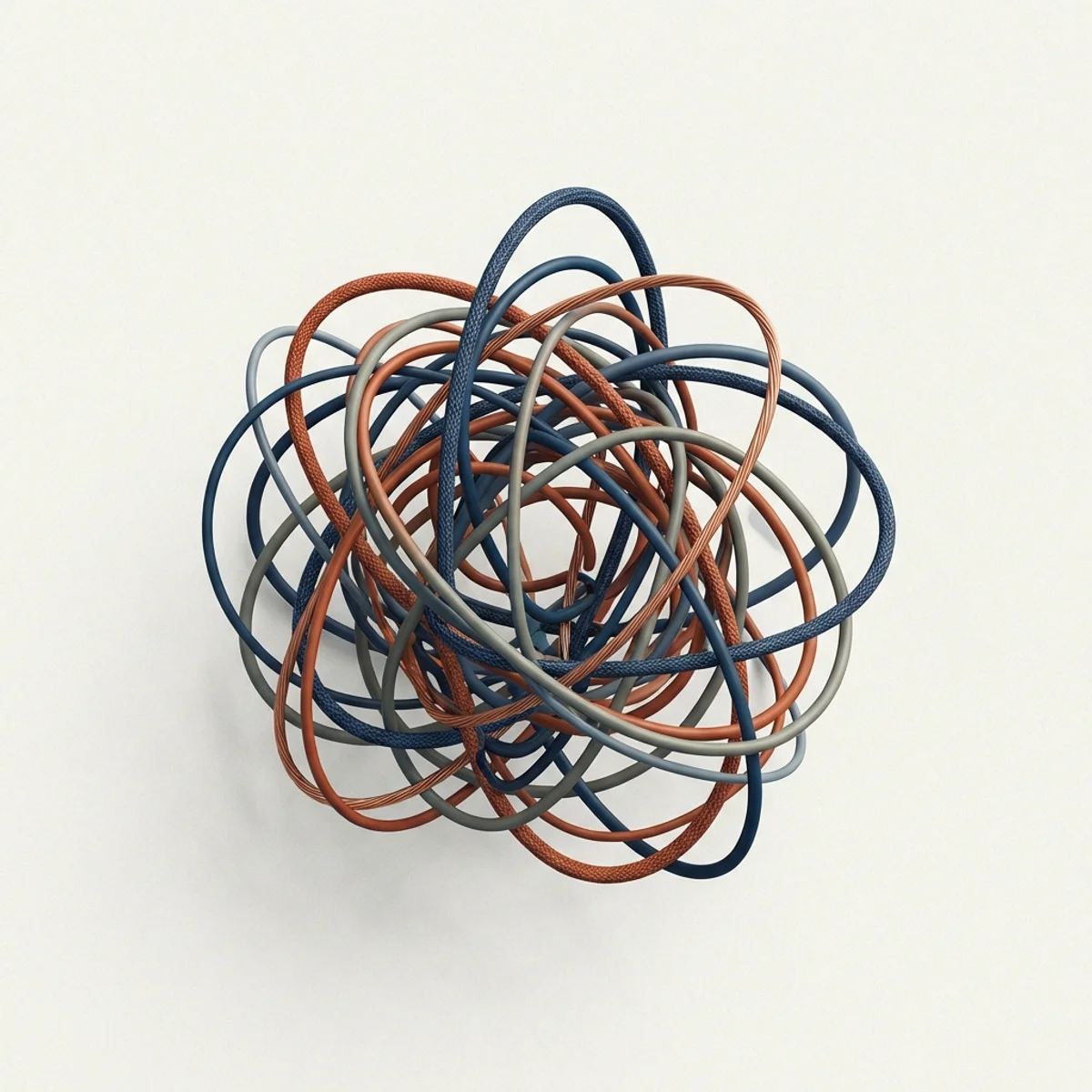
A famous study proved that if you put a string in a box and shake it, it will spontaneously form a complex knot within seconds, but only if the string is long enough.
Smith and Raymer placed strings of various lengths into a box and tumbled them. They performed this 3,415 times. They found that knot formation wasn’t random; it was nearly guaranteed.
Why? Because there is only one way for a string to be untangled. There are, however, millions of ways for it to be tangled. As the string tumbles, the ends cross over the middle. Once an end passes through a loop, a knot is born. The second law of thermodynamics (entropy) states that systems naturally move toward disorder. An untangled cable is highly ordered. A knot is high disorder. The universe prefers the knot.

The 46cm Threshold
Mathematics reveals a critical threshold: any cord shorter than 46 centimeters (18 inches) will rarely tangle, while cords longer than this will tangle almost 100% of the time.
The study found a “critical length” for chaos.
- Below 46cm: The cord is too stiff relative to its length to form a loop and pass through it.
- Above 46cm: The probability of knotting skyrockets.
- At 2 meters (standard earphone length): The probability of a spontaneous knot reaches 50% within seconds of movement.
Since standard wired earbuds are about 120cm-140cm long, they are literally designed to be in the “maximum knotting probability” zone.
Why Flat Cables Don’t Tangle
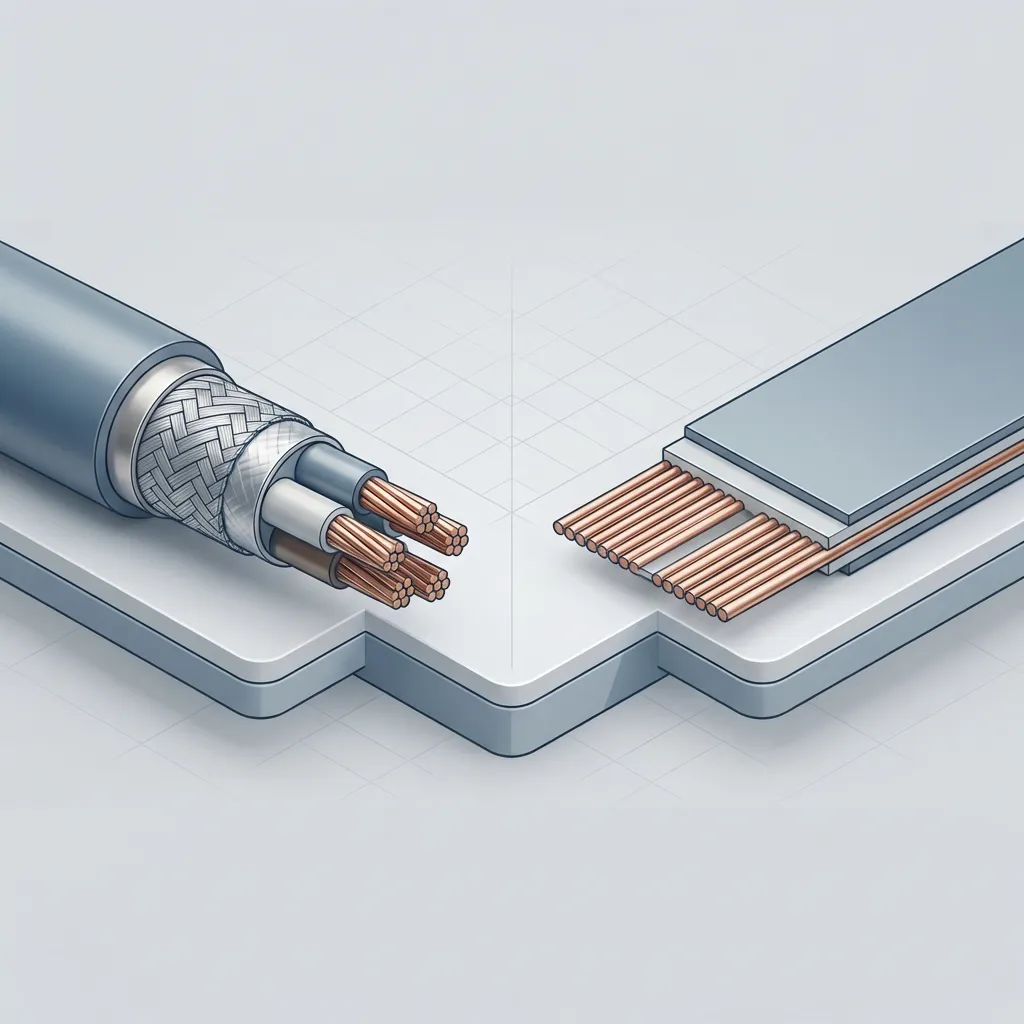
Flat cables resist tangling because they have only one axis of flexibility, restricting the ‘degrees of freedom’ required for the cord to loop back on itself.
Round cables can twist and rotate in any direction. This freedom allows them to form coils easily. Flat cables, however, act like a belt. They prefer to stay flat.
For a knot to form in a flat cable, the cable has to twist against its natural grain. This resistance drastically reduces the number of possible “micro-states” the cable can exist in. By limiting the movement to 2 dimensions instead of 3, you rig the probability game back in your favor.