
The Mandela Effect: False Memories or Parallel Realities?
It started with a simple question online: “Do you remember Nelson Mandela dying in prison in the 1980s?” Thousands of people replied “Yes.” They remembered the news clips, the funeral, the mourning in South Africa. The only problem? Nelson Mandela was still alive, eventually passing away in 2013.
This phenomenon, dubbed the “Mandela Effect” by paranormal consultant Fiona Broome, has exploded into a cultural investigation of reality itself. From the spelling of the “Berenstain Bears” to the existence of a movie called Shazaam starring Sinbad, millions share specific, identical memories that contradict historical fact. Is the fabric of spacetime tearing, or are our brains just glitching in unison?
The Glitch in the Matrix
The ‘Mandela Effect’ refers to a situation where a large group of people share a specific, vivid memory that is demonstrably false, leading some to theorize about alternate timelines.
The examples are unsettlingly specific. Did the Monopoly man have a monocle? (No.) Did Pikachu have a black tip on his tail? (No.) Did Darth Vader say, “Luke, I am your father”? (No, he said, “No, I am your father.”)
For those experiencing the effect, the memory feels as real as looking at their own hands. The cognitive dissonance is so strong that accepting a “parallel universe” theory often feels more logical than admitting the memory is wrong.
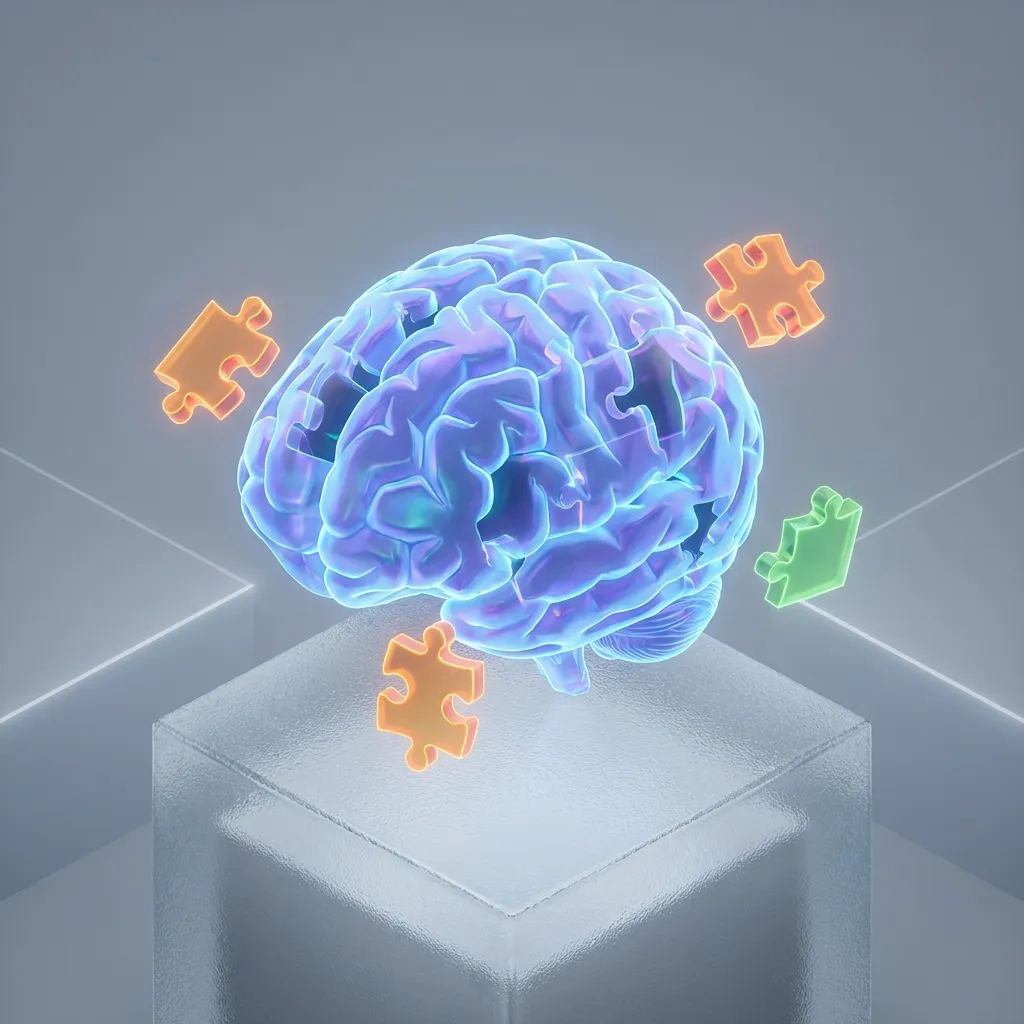
Confabulation: The Brain’s Autocomplete
Memory is not a video recording but a reconstructive process; when gaps appear, the brain uses ‘confabulation’ to fill them with logical (but sometimes incorrect) information without our conscious awareness.
Neuroscience tells us that every time you recall a memory, you are essentially rewriting it. We store memory in fragments: a sound here, an image there, an emotion somewhere else. When you try to remember something, your prefrontal cortex acts as a director, assembling these clips into a scene.
If a piece is missing, the brain doesn’t like blank spaces. It runs an “autocomplete” function based on logic. “Monopoly is about a rich capitalist; rich capitalists wear monocles; therefore, the Monopoly man wears a monocle.” It inserts the monocle efficiently and seamlessly. You don’t feel the edit happen. You just “remember” it.
Social Contagion: Sharing the Virus
False memories can be transmitted like a virus; when one person confidentially states a false detail, it can overwrite the uncertain memories of others, creating a feedback loop of collective error.
This is known as the “illusory truth effect.” If you are 80% sure it’s “Berenstain” but ten people online scream it was “Berenstein,” your brain updates its file to match the tribe. We are social creatures, and shared reality is often prioritized over objective accuracy. The internet has acted as a hyper-accelerator for this, allowing false memories to synchronize globally in seconds.

The Multiverse Theory
While scientifically unproven, the ‘Many-Worlds Interpretation’ of quantum mechanics provides a seductive framework for the Mandela Effect, suggesting we may be sliding between parallel probabilities.
Physicists verify that quantum particles can exist in multiple states simultaneously. Some theorists suggest that our macro reality behaves similarly, branching off into infinite timelines with every decision. In this view, the “Mandela Effect” isn’t a memory error. It’s residue from a timeline where you did grow up reading the “Berenstein Bears.”
While it makes for great sci-fi, Occam’s Razor suggests the simpler answer is usually right: The most complex supercomputer in the known universe, the human brain, sometimes gets a little creative with the facts.