
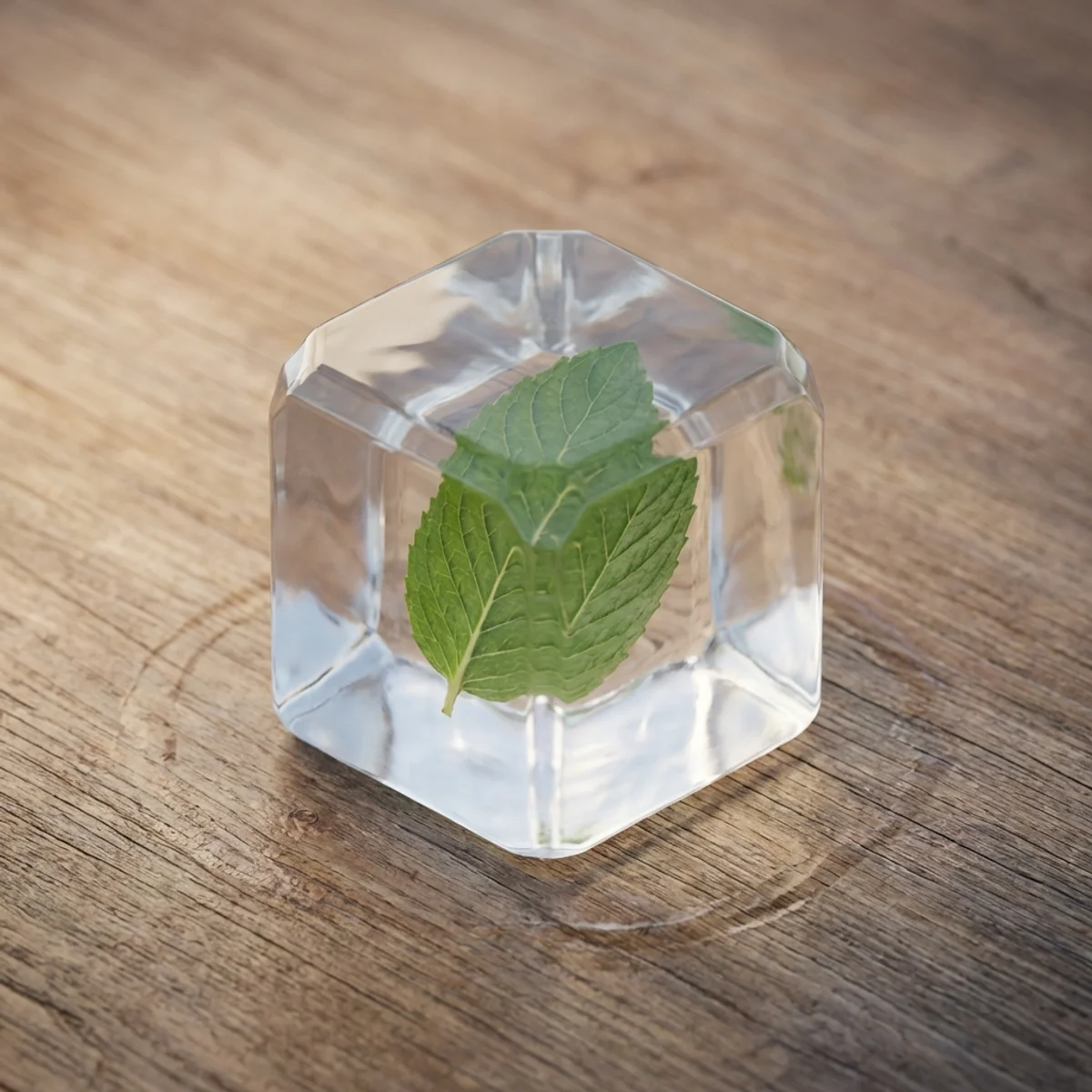
Why Mint Makes Your Mouth Feel Cold (It’s a Chemical Illusion)
You take a sip of water after chewing gum, and suddenly, it feels like you’re drinking glacial runoff. Your mouth isn’t actually cold; the temperature hasn’t dropped a single degree. Yet, your brain is screaming “Ice!”
This is one of the most common sensory hallucinations we experience. It is a chemical trick, a biological hack that reveals how our bodies perceive reality not as it is, but as our nerves tell us it is.
The culprit is a crystalline alcohol called menthol, and it doesn’t cool you down. It effectively changes the settings on your body’s thermometer.
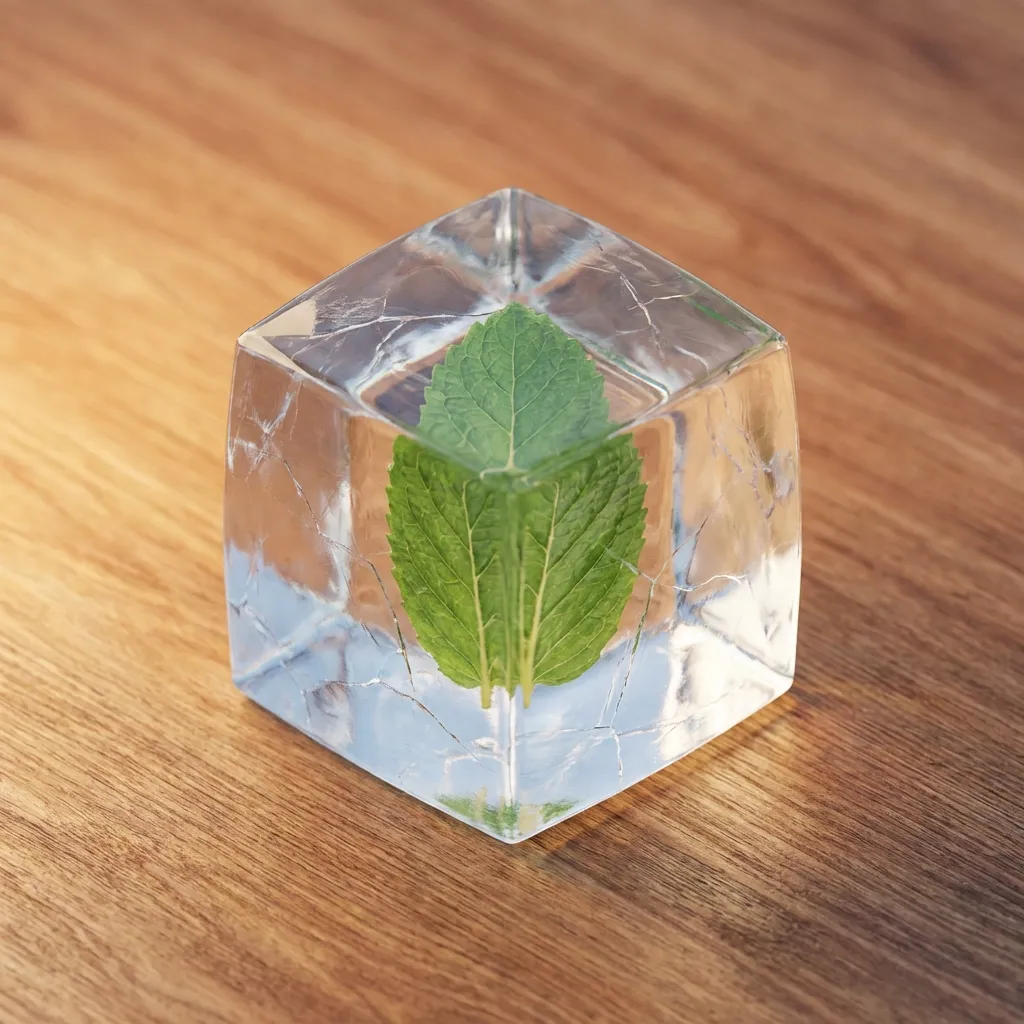
The TRPM8 Receptor (Nature’s Cold Switch)
Your mouth contains specialized sensory neurons equipped with TRPM8 ion channels, which are designed to open only when temperatures drop below 78°F (26°C).
Your skin and tongue are covered in nerve endings. These aren’t just simple wires; they are complex biological sensors. Specifically, we have a protein entitled TRPM8 (Transient Receptor Potential Melastatin 8).
Think of TRPM8 as a gatekeeper. Normally, this gate stays closed. But when the temperature drops (specifically, when it gets cool), the gate physically changes shape and opens. This allows calcium ions to flood into the nerve cell, generating an electrical signal that travels to your brain. Your brain interprets this signal as “Cold.”
Usually, this system is reliable. If TRPM8 fires, it means the environment is cold. Until you introduce a specific plant molecule that knows how to pick the lock.
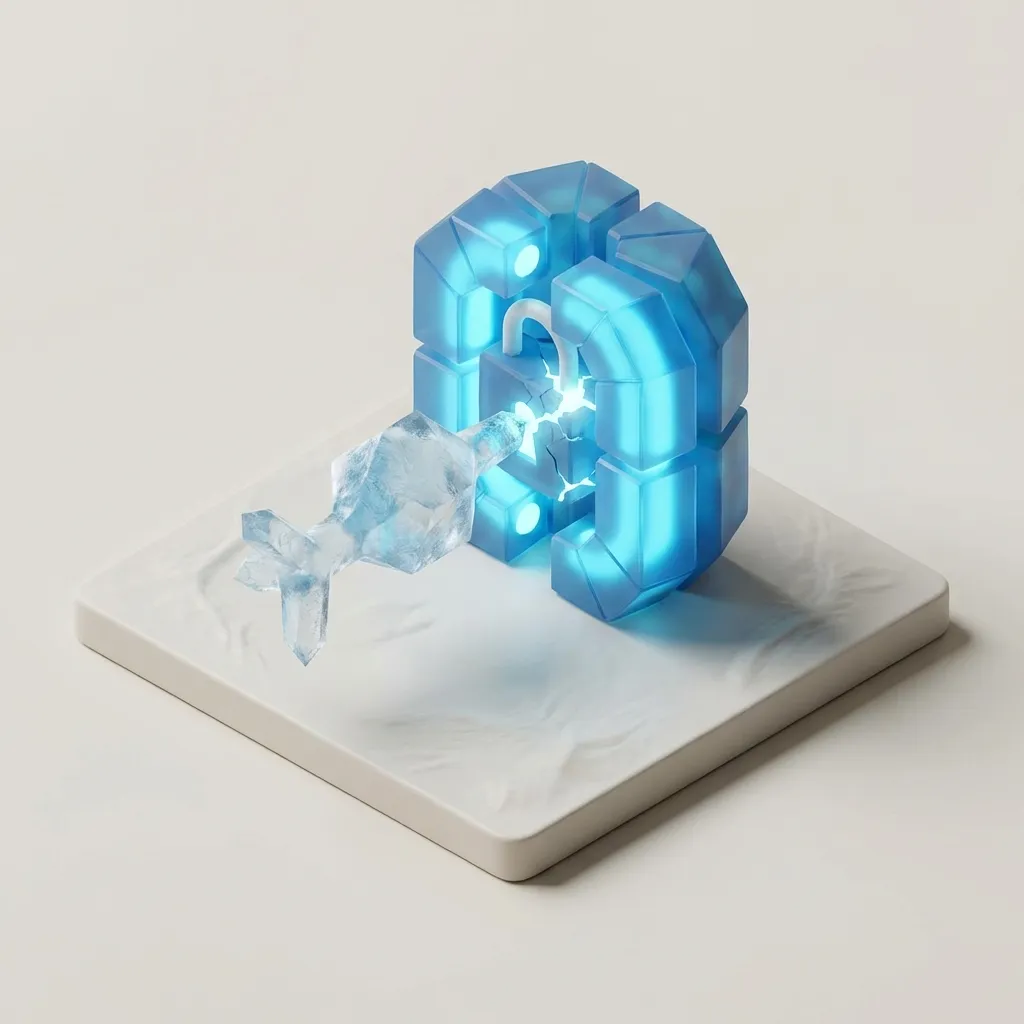
The Sensitivity Shift (Moving the Goalposts)
Menthol binds to the TRPM8 receptor and lowers its activation threshold, causing it to fire at warm temperatures that it would normally ignore.
Here is the “Information Gain” hook: Menthol doesn’t create cold; it shifts the definition of cold.
When menthol binds to the TRPM8 receptor, it makes the receptor hypersensitive. Normally, the receptor needs a temperature of 78°F or lower to activate. In the presence of menthol, that threshold shifts upward dramatically.
Suddenly, the receptor will trigger at temperatures as high as 85°F or 90°F.
This means that the air inside your mouth, which is near body temperature (98.6°F), or a glass of room-temperature water, is now “cold” enough to trigger the sensor. Your nerves are sending a “Freezing!” signal to the brain, even though the physical environment is warm. Your brain trusts the nerve, creating the undeniable sensation of cold.
Why Water Makes It Worse
Drinking water washes away saliva but spreads the menthol oil across more surface area, simultaneously cooling the tongue slightly and triggering the hypersensitive receptors.
The “cold water effect” is a double whammy.
First, water is usually cooler than your mouth’s internal temperature. In a normal state, 70°F water feels neutral or slightly cool. But with your TRPM8 receptors sensitized by menthol, 70°F feels effectively like 35°F. The signal is amplified.
Second, evaporation plays a role. When you breathe in sharply after a mint, the airflow evaporates saliva, slightly cooling your tongue. Because your sensitivity is dialed up to eleven, this tiny drop in temperature feels like an arctic wind.
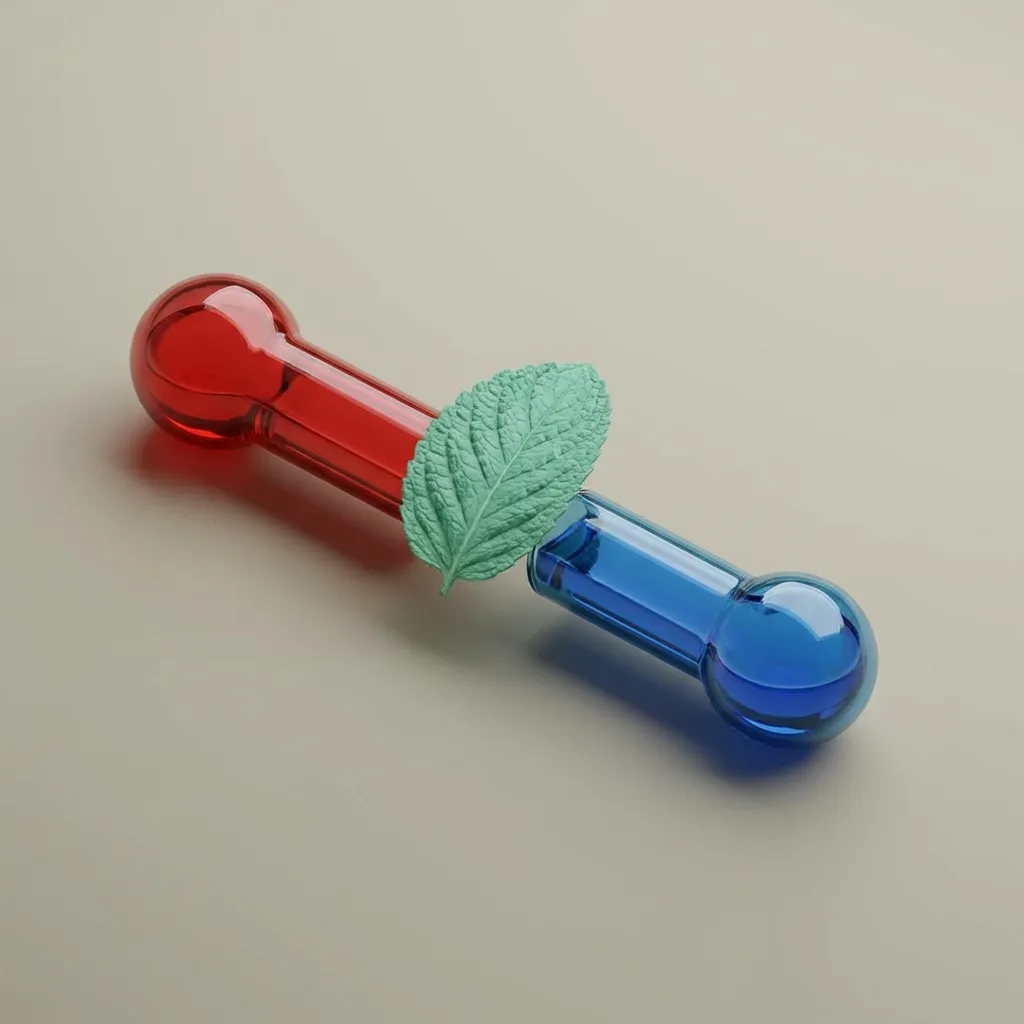
Not Just Mint (The Hot Equivalent)
This mechanism is the exact opposite of Capsaicin (spiciness), which binds to the TRPV1 receptor and lowers the threshold for heat pain.
Nature loves symmetry. Just as menthol hijacks the cold receptor (TRPM8), capsaicin (the active chemical in chili peppers) hijacks the heat receptor (TRPV1).
Capsaicin binds to TRPV1 and lowers the temperature at which it detects “burning heat.” Suddenly, your own body temperature feels hot enough to burn. That is why spicy food feels “hot” and mint feels “cold.” Neither changes the temperature; they both just lie to your brain.