Why Shower Curtains Attack You (The Physics of the Flap)
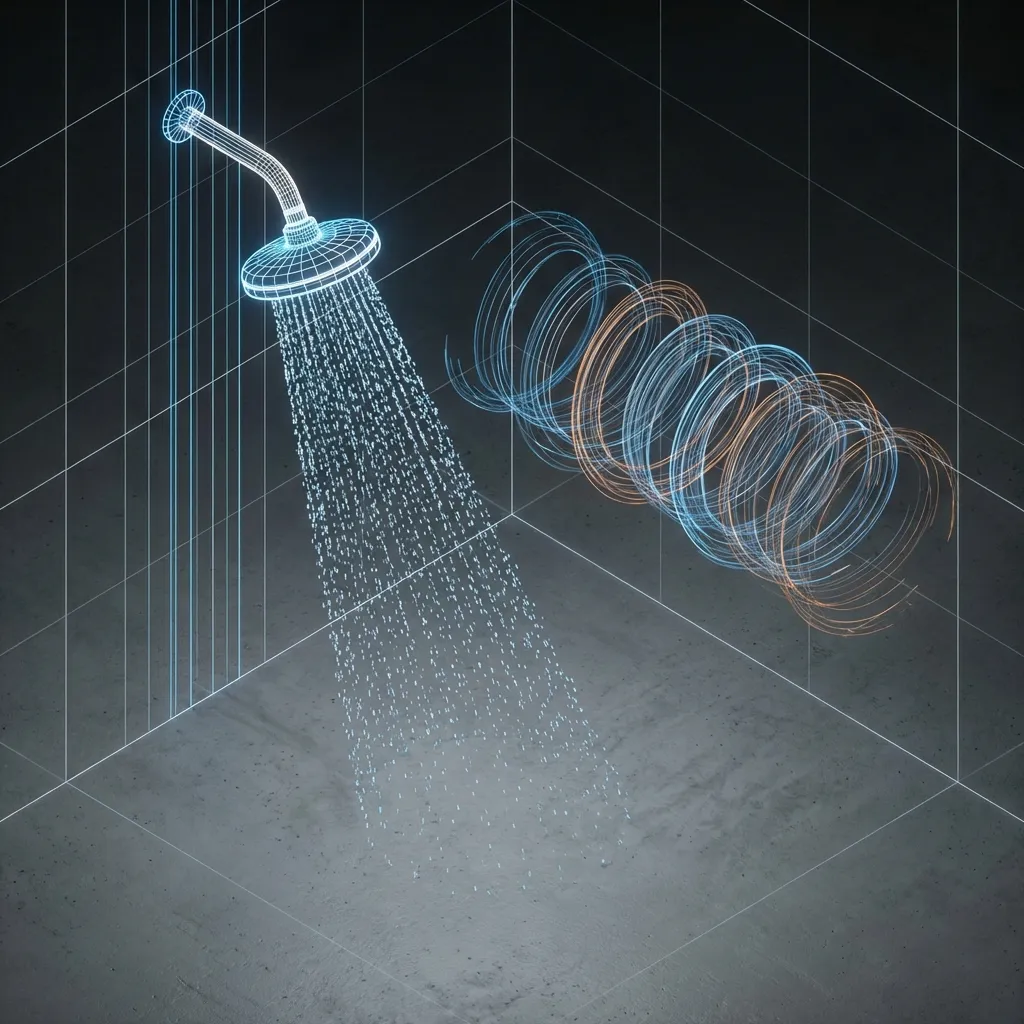
It is a morning ritual: You step into the shower, turn on the water, and moments later, the curtain creeps inward. It brushes against your leg. You push it back. It returns, clinging to you like a needy pet.
For decades, this annoying phenomenon baffled physicists. Why does a curtain blow in towards the water rather than being pushed out by the splash?
The answer involves clear fluid dynamics, a misunderstood principle, and a computer simulation that finally solved the mystery.
The Bernoulli Principle (The Classic Suspect)
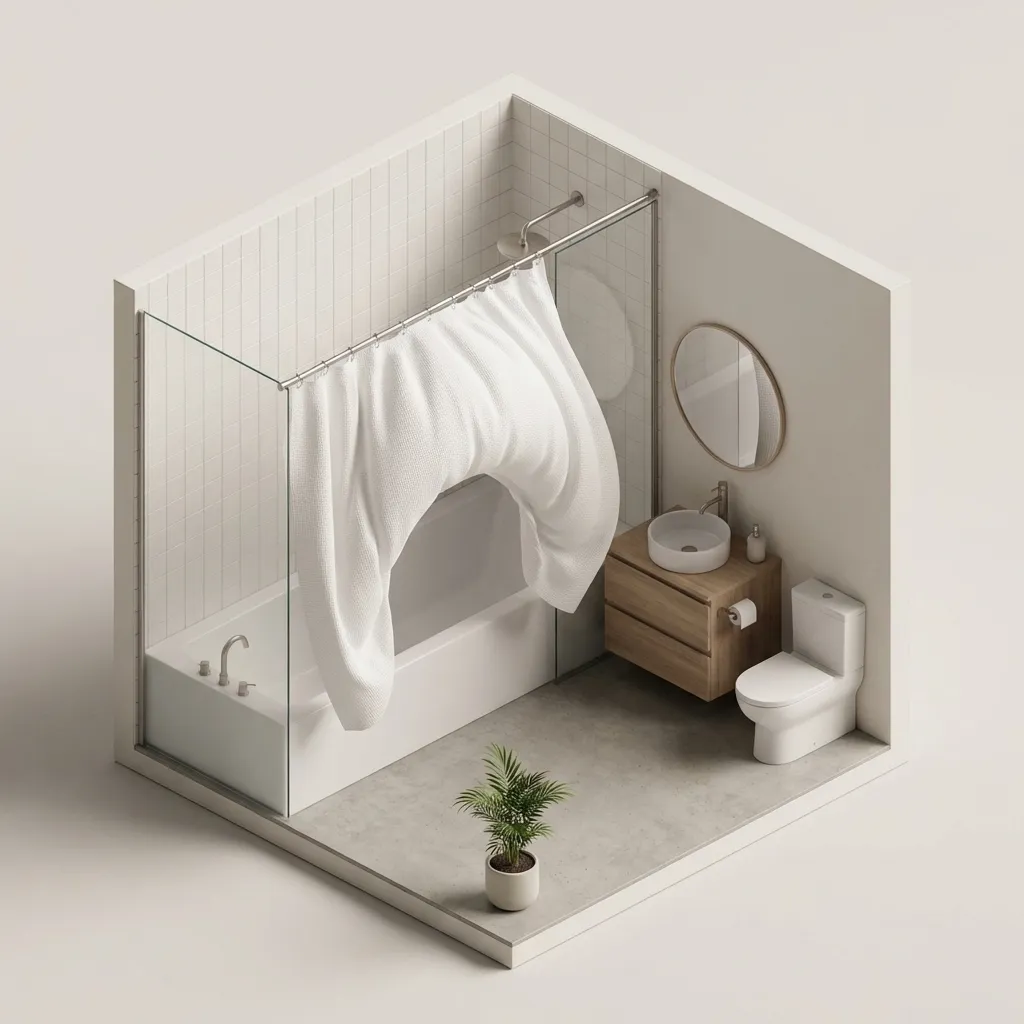
According to Bernoulli’s principle, faster-moving fluids (like air) have lower pressure. The water spray accelerates the air next to it, creating a low-pressure zone that sucks the curtain in.
For a long time, this was the textbook explanation. Daniel Bernoulli discovered that as the speed of a fluid increases, its pressure decreases.
In your shower, the water shoots out of the showerhead at high speed. As it flies through the air, it drags nearby air molecules along with it (due to friction). This creates a stream of faster-moving air parallel to the curtain. Because this air is moving fast, its pressure drops.
The air outside the shower (in the rest of the bathroom) is still and sits at standard atmospheric pressure. This higher outside pressure pushes against the curtain, forcing it into the low-pressure zone inside the tub.
It sounds perfect. But it isn’t the whole story.
The Chimney Effect (Why It’s Wrong)
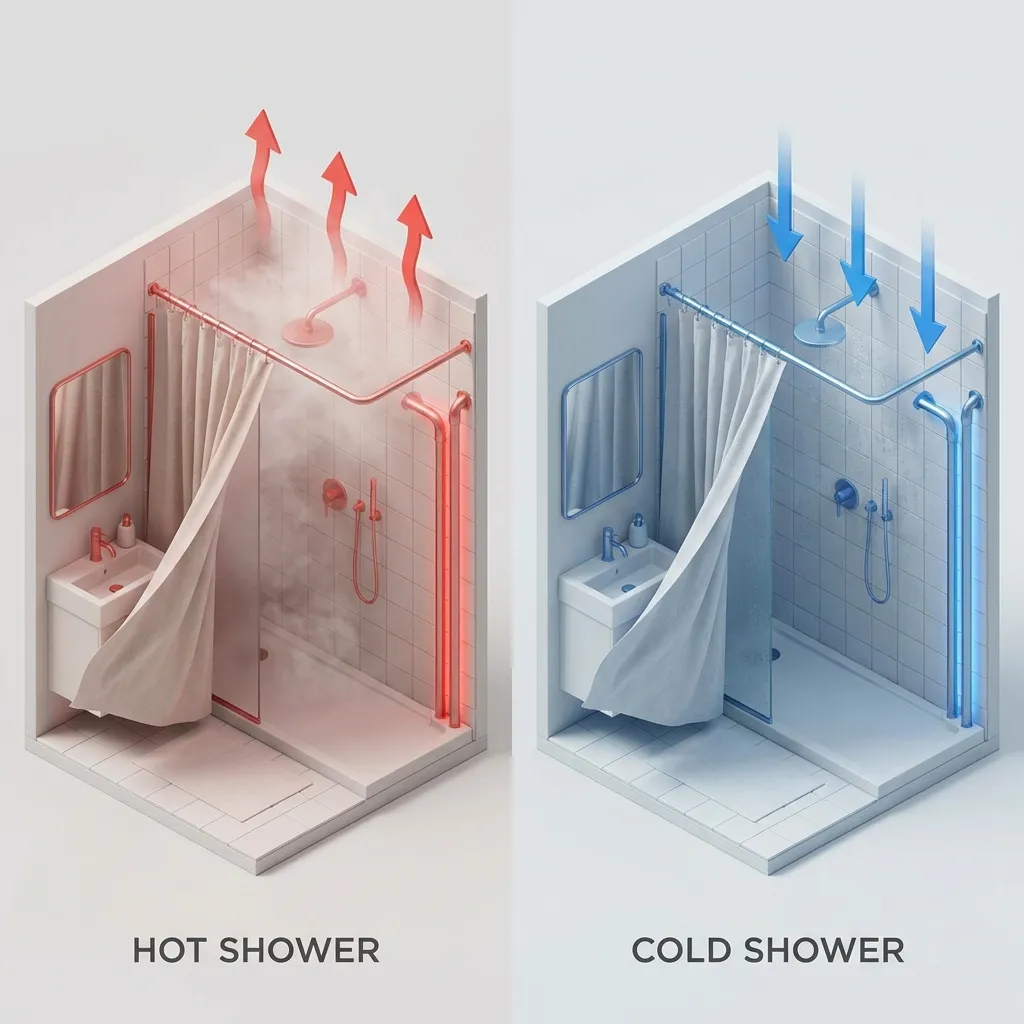
The ‘Chimney Effect’ theory suggests that hot air rising creates a vacuum at the bottom, but this is debunked by the fact that cold showers cause the curtain to blow inward too.
Another common theory is buoyancy. The idea is that hot water heats the air inside the shower. Hot air is less dense and rises, exiting over the top of the rail. This rising air creates a vacuum at the bottom of the shower, pulling cool air in from underneath the curtain to replace it. This inward rush of air pushes the curtain.
It makes intuitive sense. However, anyone who has ever taken a freezing cold shower knows the truth: the curtain still blows inward. The temperature drive isn’t strong enough to be the primary cause.
The Vortex Theory (The Real Culprit)
Computer simulations reveal that the water spray creates a continuous horizontal vortex (a spinning cylinder of air) whose low-pressure center acts like a vacuum cleaner.
In 2001, researcher David Schmidt used complex computational fluid dynamics (CFD) software to model a shower. He broke the bathroom into 50,000 tiny cells and let the physics engine run.
The simulation revealed something unexpected: a horizontal vortex.
As the water spray falls, it drags air down. But the shower is an enclosed box. The air hits the floor, flows sideways, rushes up the curtain, and gets pulled back into the spray near the top. This creates a stable, spinning wheel of air, a vortex, rotating perpendicular to the curtain.
Just like the eye of a tornado, the center of a vortex has extremely low pressure. This low-pressure eye sits right near the shower curtain. It is this horizontal cyclone that essentially sucks the curtain into the tub.