The Kessler Syndrome: The Invisible Wall That Could Be Earth’s Final Prison
We tend to think of space as infinite. It is a vast, empty void where we can launch as many rockets and satellites as we want without consequence. But the orbit around our planet is not infinite. It is a finite resource, a thin shell of gravity that we have been filling with junk for 70 years.
In 1978, NASA scientist Donald Kessler predicted a nightmare scenario. He calculated that eventually, we would put enough traffic into Low Earth Orbit (LEO) that a single collision would not just be an accident. It would be a detonator.
This is the Kessler Syndrome. It is the mathematical certainty that if we aren’t careful, we will build an invisible wall of shrapnel around our planet that will lock us on the surface for centuries.
The Chain Reaction (The Debris Cascade)
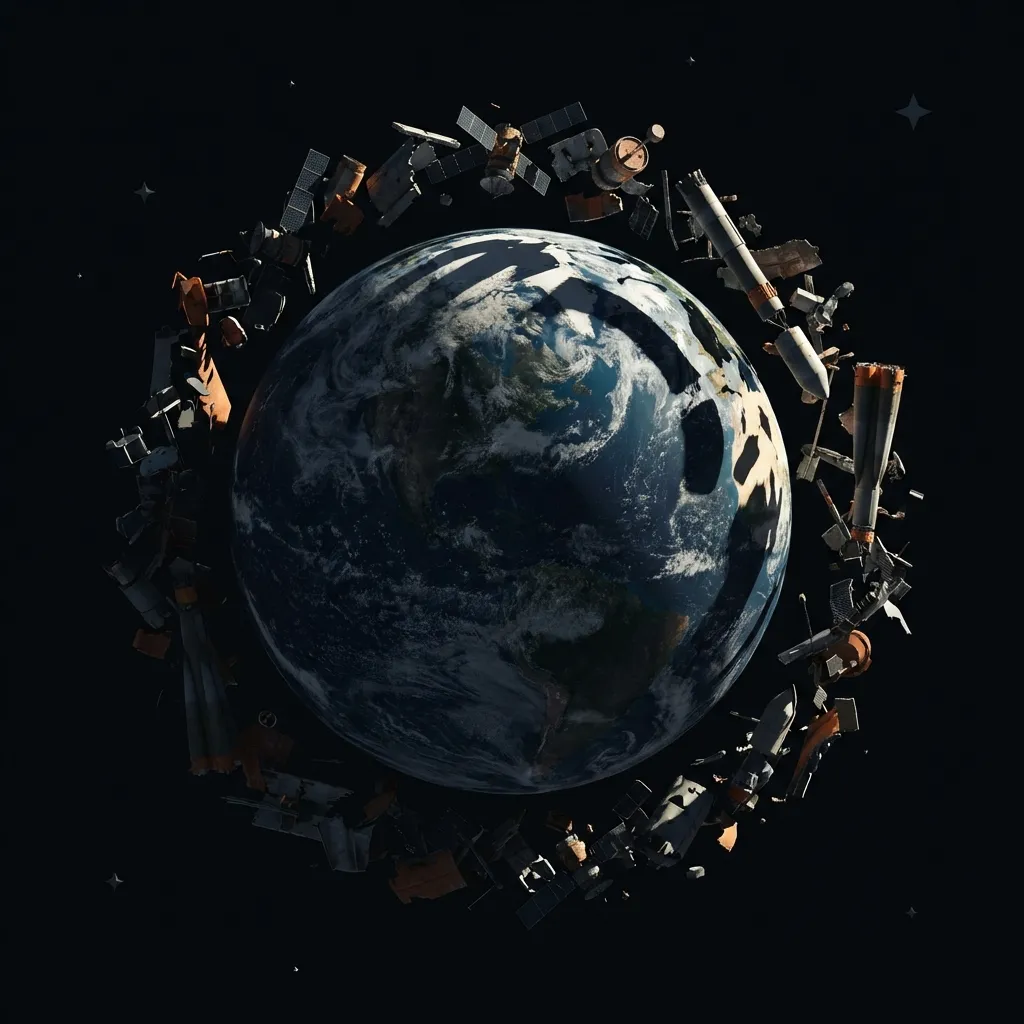
The Kessler Syndrome is a self-sustaining chain reaction where debris from one collision destroys other satellites, creating exponentially more debris until orbit becomes unusable.
Imagine driving on a highway where, if two cars crash, they don’t just stop. They shatter into thousands of pieces of metal, and each piece stays on the highway moving at 17,500 miles per hour. Those pieces hit other cars, which shatter into more pieces. Soon, the air is filled with flying bullets of metal.
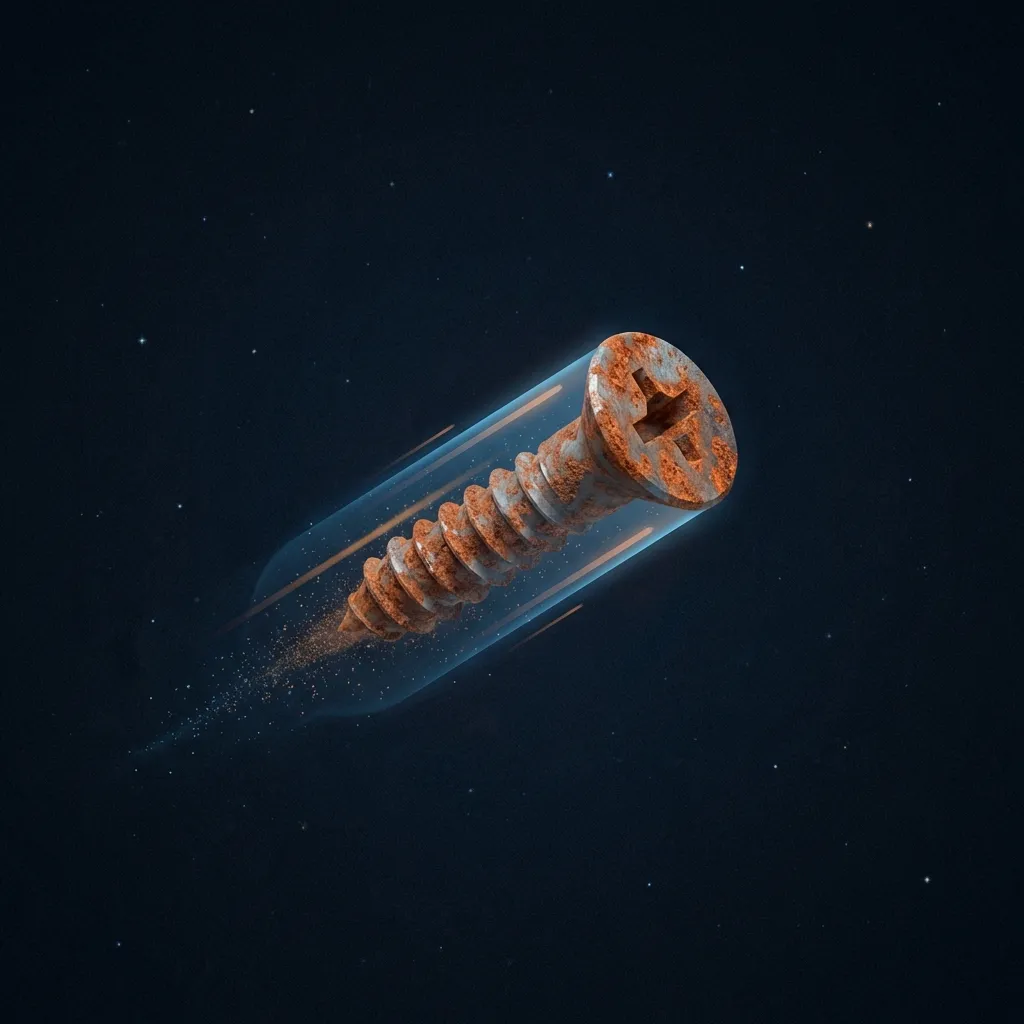
That is Low Earth Orbit today. There are currently over 130 million pieces of debris smaller than 1 millimeter orbiting Earth. But the real danger lies in the large objects. Old rocket stages, dead satellites, and lost bolts.
When two of these potential bullets collide, they create a cloud of new debris. This debris spreads out into a shell around the planet. Any satellite passing through this shell is at risk. If the density gets high enough, the cascade becomes unstoppable. We wouldn’t need to launch anything new for it to happen; the junk already up there would just keep grinding itself into finer and finer dust, acting like a sandblaster against anything we try to send to the stars.
The 2009 Warning Shot
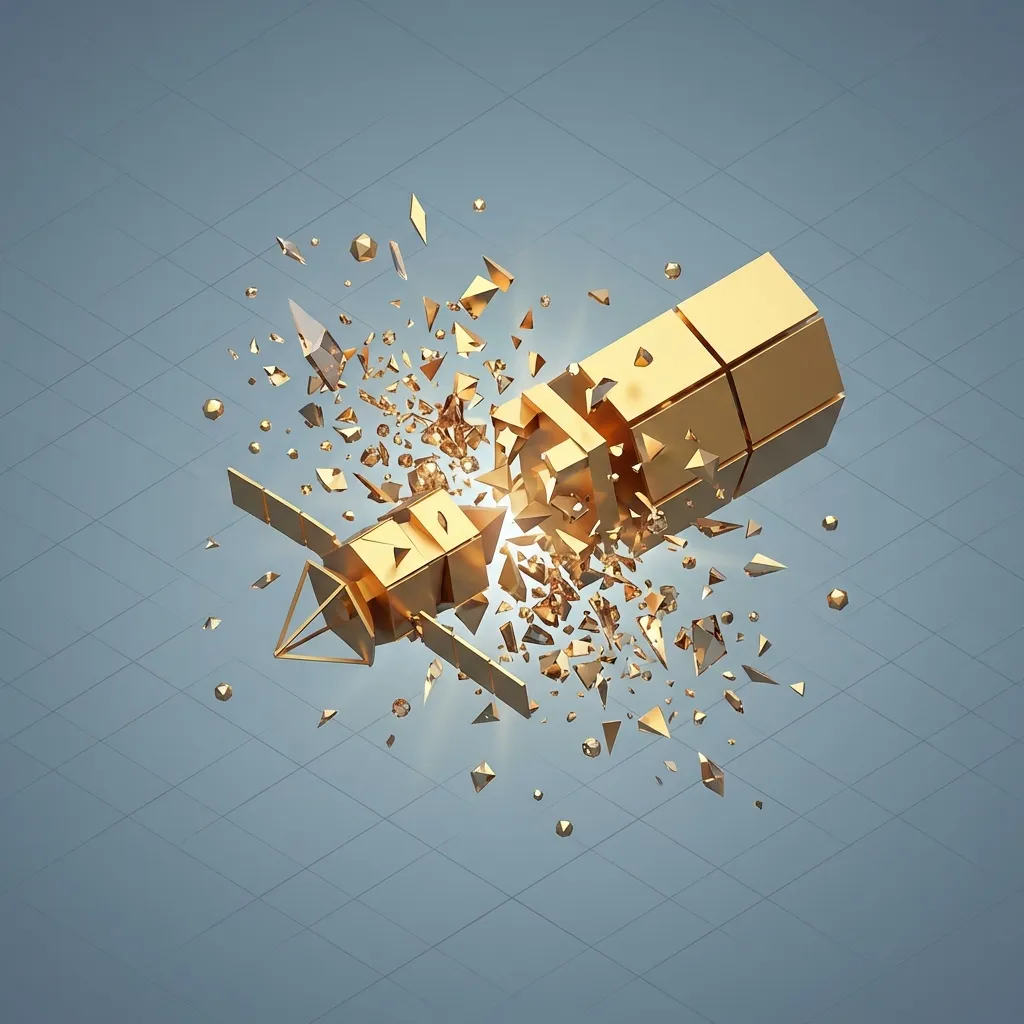
The first hypervelocity collision between two intact satellites occurred in 2009 when an active Iridium satellite slammed into a defunct Russian Cosmos satellite, creating over 2,000 pieces of trackable debris.
For decades, the Kessler Syndrome was just a theory. Then, on February 10, 2009, it became reality.
Iridium 33 was a working communications satellite providing phone service. Cosmos 2251 was a dead Russian military bird that had been drifting for over a decade. They crossed paths over Siberia.
They collided at a relative speed of 26,000 miles per hour. The impact was catastrophic. Both satellites were instantly vaporized into clouds of shrapnel. NASA estimates that this single event created over 2,000 pieces of debris larger than a softball, and hundreds of thousands of smaller pieces.
Much of that debris will remain in orbit for a century. Every piece is a potential killer for the International Space Station or a SpaceX Starlink satellite. It was the universe firing a warning shot across our bow: the sky is getting crowded.
The Day the GPS Died
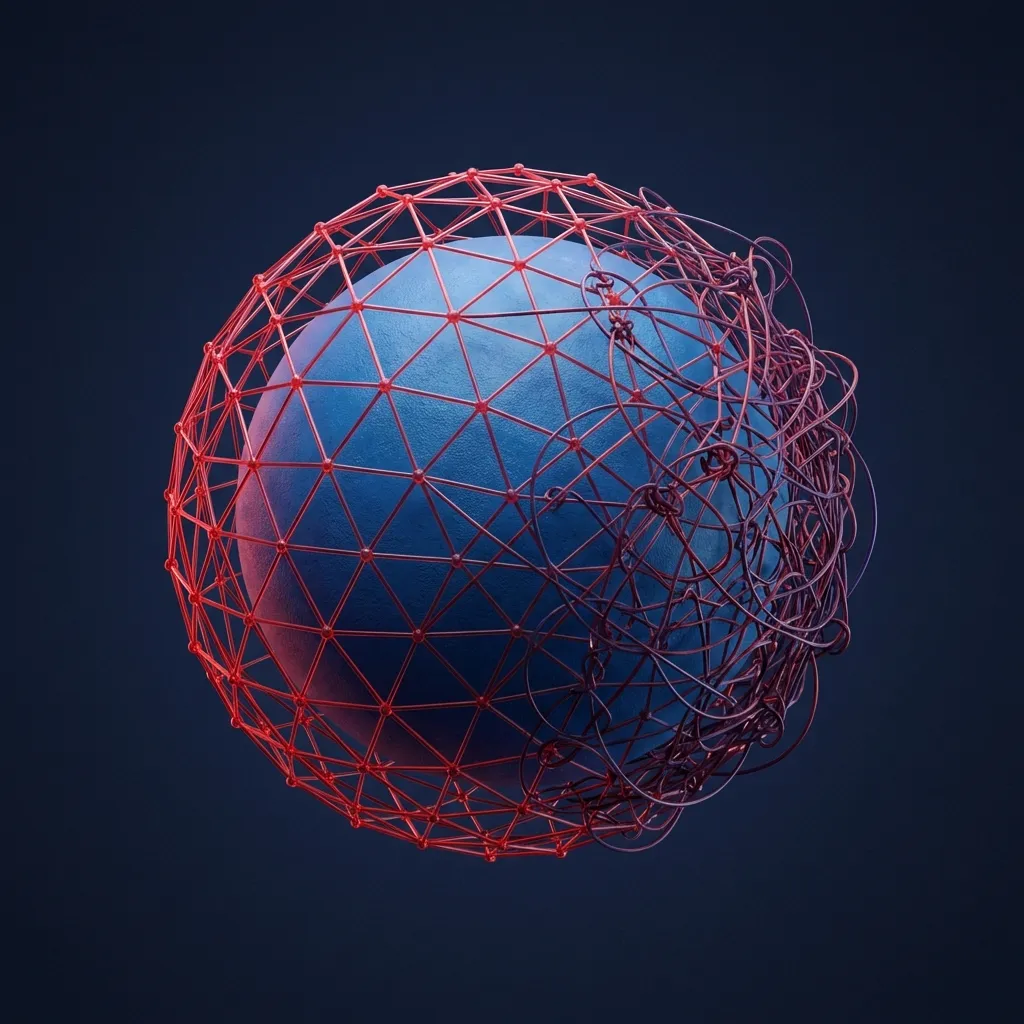
A full Kessler event would likely destroy the GPS and communications satellites we rely on, ending global navigation, weather forecasting, and instant communication.
People often ask, “So what if we can’t launch rockets? I don’t plan on going to Mars.” But the Kessler Syndrome isn’t just about exploration. It’s about your phone.
If the debris cascade reaches higher orbits, it could take out the Global Positioning System (GPS). GPS isn’t just for Google Maps; it synchronizes the timing of global banking transactions, the power grid, and the internet itself.
Imagine a world where ATMs stop working, ships get lost at sea, and weather forecasts go dark because the weather satellites have been shredded. We would effectively be knocked back to the technology level of the 1960s, but without the ability to launch replacement satellites to fix it. We would be a high-tech civilization trapped in a low-tech cage.
The Century Lock-In
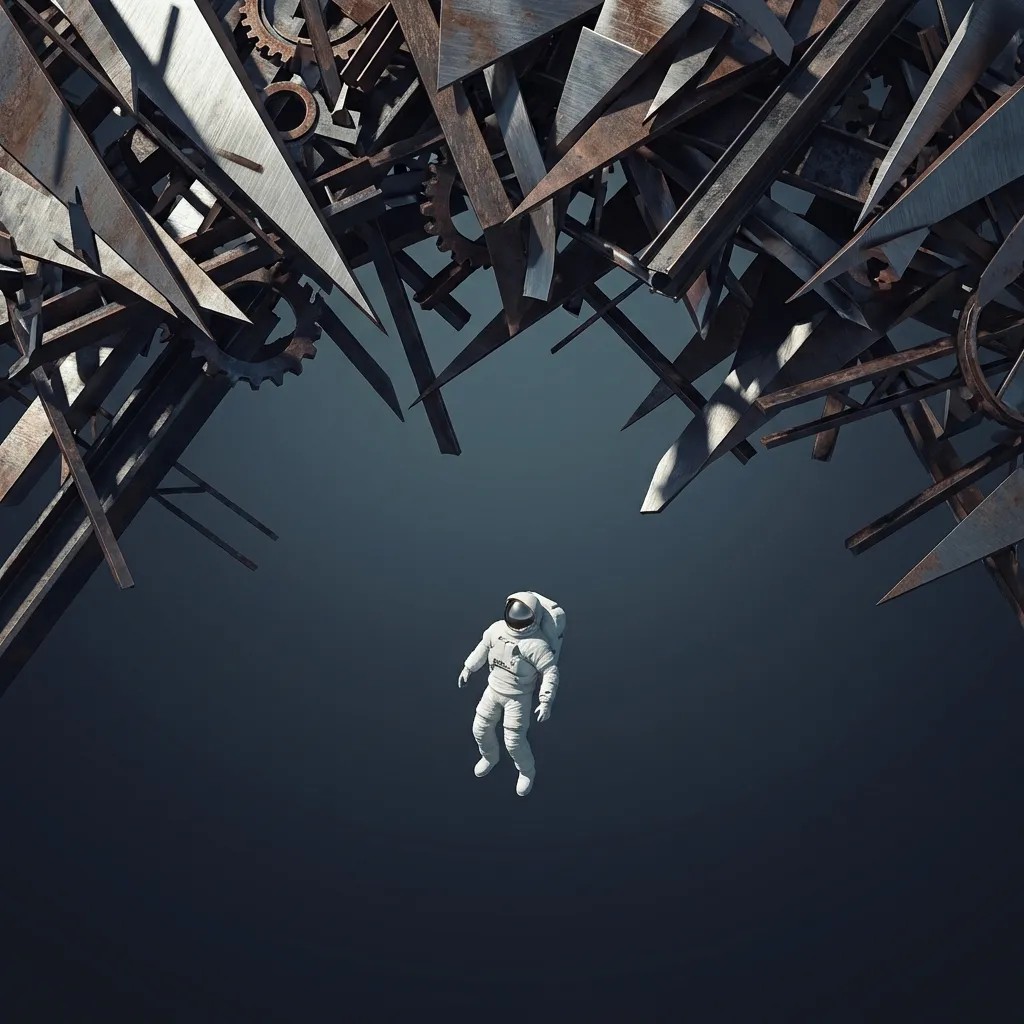
Once the cascade begins, the debris belt could remain lethal for hundreds of years, making space exploration impossible until the junk naturally falls out of orbit.
The most terrifying aspect of the Kessler Syndrome is the timeline. There is no vacuum cleaner for space. We have no technology capable of scrubbing millions of tiny metal flecks moving at orbital velocities.
If we trigger a full cascade, we have to wait. We have to wait for atmospheric drag to slowly, painfully pull the debris down so it burns up in the atmosphere. For high altitudes, this can take centuries.
Civilizations are defined by their ability to expand. The Kessler Syndrome is the Great Filter. It is the test that determines if a species is smart enough to manage its own waste before it traps itself on its home world forever. We are currently failing that test.