All Articles

Explore our collection of easy-to-understand articles on various topics

The Smell of Rain (Petrichor): Nature's Chemical Signal
Everyday Science

The Smell of Rain (Petrichor): Nature's Chemical Signal

The scent of rain, 'Petrichor', primarily comes from Geosmin, a chemical byproduct of soil bacteria. Humans are hypersensitive to it, detecting it at 5 parts per trillion—more sensitive than a shark is to blood—likely an evolutionary trait for finding water.

Why do we love the smell of rain? It's not just nostalgia. Discover the evolutionary biology and chemistry behind Petrichor and Geosmin, the scent humans are more sensitive to than sharks are to blood.

January 11, 2026 By Priya Sharma
The Mandela Effect: False Memories or Parallel Realities?
Human Logic

The Mandela Effect: False Memories or Parallel Realities?

The Mandela Effect is likely a result of 'confabulation' and social reinforcement, where the brain fills in gaps in memory with plausible but incorrect details, which are then validated by others, creating a shared false reality.

Millions of people clearly remember Nelson Mandela dying in prison in the 1980s. But he didn't. Are we shifting timelines, or is our brain playing tricks? Discover the science of collective false memories.

January 11, 2026 By Maria Garcia
Why Time Seems to Speed Up as We Age
Human Logic

Why Time Seems to Speed Up as We Age

As we age, our brain processes fewer new mental images per second due to neural slowing and familiar routines. This 'logarithmic time perception' makes years feel shorter because they constitute a smaller percentage of our total life experience.

Ever feel like years are flying by faster than they used to? Discover the surprising neuroscience and psychology behind why our perception of time accelerates as we get older.

January 11, 2026 By Maria Garcia
Why Do We Get Déjà Vu? The Brain's Glitch Explained
Human Logic

Why Do We Get Déjà Vu? The Brain's Glitch Explained

Déjà Vu is essentially a 'brain stutter' where your brain processes present sensory information as a memory. This often happens due to 'Split Perception' (one eye seeing faster than the other) or a mismatch between short-term and long-term memory circuits.

That eerie feeling that 'I have been here before' isn't a psychic premonition. It's a specific neurological glitch involving memory circuits and split-second delays.

January 11, 2026 By Maria Garcia
Why Earphones Always Tangle (Knot Theory)
Everyday Science

Why Earphones Always Tangle (Knot Theory)

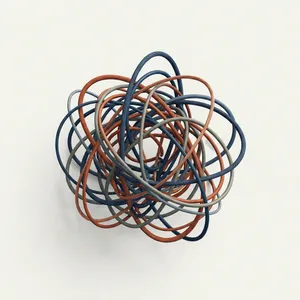
Spontaneous knotting is mathematically inevitable for any cord longer than 46 centimeters. As a cord tumbles, there are thousands of ways it can cross over itself to form a knot, but only one way for it to remain untangled. Entropy always favors chaos.

It's not bad luck. It's physics. Discover the mathematical 'Knot Theory' that proves any cord longer than 46cm will spontaneously tangle itself.

January 11, 2026 By Priya Sharma
Dead Internet Theory: Are You reading This, or Did a Bot Write It?
Emerging Tech

Dead Internet Theory: Are You reading This, or Did a Bot Write It?

The Dead Internet Theory posits that the majority of internet activity is now synthetic. With 2024 studies showing nearly 50% of web traffic is bots, and AI models suffering from 'Habsburg AI' (inbreeding collapse) by training on their own output, the human internet is rapidly shrinking into a ghost town of digital echoes.

The internet is becoming a ghost town populated by AI bots talking to other AI bots. Discover the Dead Internet Theory and the looming threat of 'Habsburg AI'.

January 10, 2026 By Zeynep Demir
Why Coffee Tastes Bad on Airplanes (And Different in Denver)
Everyday Science

Why Coffee Tastes Bad on Airplanes (And Different in Denver)

Coffee tastes wildly different at altitude because physics changes the rules of brewing. Atmospheric pressure drops, lowering the boiling point of water. This means water literally cannot get hot enough to extract the full flavor from the beans, leading to a sour, weak cup. On airplanes, dry air and noise further suppress your taste buds by 30%.

Why does coffee taste weak at altitude? The lowered boiling point of water leads to under-extraction, while dry cabin air kills your sense of smell.

January 10, 2026 By Priya Sharma
Why Fingers Prune in Water (It's Not Swelling)
Everyday Science

Why Fingers Prune in Water (It's Not Swelling)

Pruney fingers are caused by the autonomic nervous system, not water absorption. When wet, your nerves trigger blood vessels to constrict, reducing volume in your fingertips. This collapses the skin into specific drainage patterns—like rain treads on a tire—to improve grip on wet surfaces.

Why do your fingers get pruney in the bath? It isn't because they absorb water. It is an active nervous system reaction designed to give you better grip.

January 10, 2026 By Lars Jansen
Why Mint Makes Your Mouth Feel Cold (It's a Chemical Illusion)
Everyday Science

Why Mint Makes Your Mouth Feel Cold (It's a Chemical Illusion)

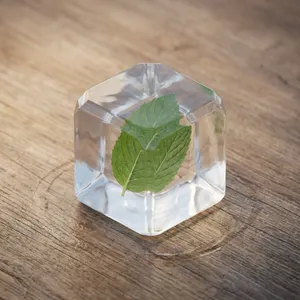
Mint feels cold because menthol molecules chemically bind to the TRPM8 ion channels in your sensory nerves—the same receptors that detect actual cold. By changing the shape of the receptor, menthol lowers its activation threshold, causing it to fire 'cold' signals to your brain even at warm temperatures.

Why does menthol feel cold? It is a sensory trick. Mint hijacks your TRPM8 receptors, lowering their activation threshold so room temperature feels freezing.

January 10, 2026 By Priya Sharma
Why Salt Melts Ice: A Molecular Gang War on Your Driveway
Everyday Science

Why Salt Melts Ice: A Molecular Gang War on Your Driveway

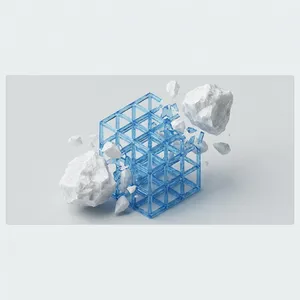
Salt doesn't melt ice by generating heat. It works by 'freezing point depression.' Dissolved salt ions violently insert themselves between water molecules, preventing them from bonding into the crystal lattice structure required to form ice. It is effectively a molecular blockade.

How does rock salt actually melt ice? It isn't heat. It is a molecular invasion called 'freezing point depression' where salt ions block water from bonding.

January 10, 2026 By Priya Sharma
Why Shower Curtains Attack You (The Physics of the Flap)
Everyday Science

Why Shower Curtains Attack You (The Physics of the Flap)

The 'Shower Curtain Effect' is caused by a horizontal vortex. As water spray falls, it drags air with it, creating a spinning cylinder of air (a vortex) inside the shower. The center of this vortex has low pressure, which pulls the flexible curtain inward like a weak vacuum.

Why does the shower curtain blow inward? It isn't just hot air. A horizontal vortex created by the water spray lowers the pressure, sucking the plastic towards you.

January 10, 2026 By Zeynep Demir
The Dream Filter: Why Your Brain Can Build a Dragon but Can't Write a Text
Human Logic

The Dream Filter: Why Your Brain Can Build a Dragon but Can't Write a Text

Why can't you read in dreams? It comes down to a specific 'power outage' in your brain's language centers (Broca's and Wernicke's areas) during REM sleep. While your visual cortex is hyper-active (creating dragons), the logical definition needed to hold a letter purely as a symbol is offline.

Discover the neuroscience behind why you can't read in dreams. While your brain constructs vivid worlds, the language centers specifically shut down.

January 10, 2026 By Ahmed Al-Sayed
Black Friday's Dark Roots: How a Day of Police Chaos Became a Global Shopping Spree
Modern Rituals

Black Friday's Dark Roots: How a Day of Police Chaos Became a Global Shopping Spree

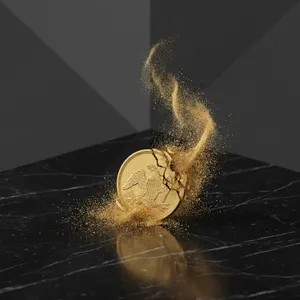
What is the true meaning of Black Friday? It has two dark origins. First, the 1869 crash of the U.S. gold market. Second, and more relevantly, it was a slang term used by Philadelphia police in the 1950s to describe the 'black' misery of managing traffic gridlock and crowds during the post-Thanksgiving rush.

Discover the true, gritty history of Black Friday. It wasn't about profits; it was about a gold market crash and a police department pushed to the brink.

January 10, 2026 By Lars Jansen
Why We Avoid Eye Contact: It's Not Anxiety, It's Your Brain Overheating
Human Logic

Why We Avoid Eye Contact: It's Not Anxiety, It's Your Brain Overheating

Why do we look away during conversation? It isn't always about shyness. Science reveals that eye contact and complex verbal processing actually compete for the same cognitive resources. We unconsciously avert our gaze to reduce 'cognitive load,' essentially dimming the visual world so our brains can focus on finding the right words.

Why do we look away when we think? It is not just social anxiety. Discover the 'Cognitive Load' theory and how eye contact drains your brain's processing power.

January 10, 2026 By Maria Garcia
The QWERTY Sabotage: Our Keyboards Were Literally Designed to Slow Us Down
Object Origins

The QWERTY Sabotage: Our Keyboards Were Literally Designed to Slow Us Down

Why do we use QWERTY? It was designed in 1873 to solve a mechanical problem (typewriter jams) that no longer exists. By separating common letter pairs, it prevented the machine from clogging. While scientifically superior layouts like Dvorak exist, the massive global 'muscle memory' of the QWERTY layout makes shifting to a better system economically impossible.

Discover why the QWERTY keyboard layout is designed to be inefficient. It wasn't built for speed; it was built to solve a mechanical problem from 1873.

January 10, 2026 By Ethan Hunt
The Kessler Syndrome: The Invisible Wall That Could Be Earth's Final Prison
Space Science

The Kessler Syndrome: The Invisible Wall That Could Be Earth's Final Prison

What is the Kessler Syndrome? It is a theoretical scenario where the density of objects in Low Earth Orbit becomes so high that collisions between objects cause a cascade effect, each crash generating debris that increases the likelihood of further collisions. This chain reaction could eventually render Earth's orbit unusable, trapping humanity on the planet and destroying satellite infrastructure.

Discover the terrifying reality of the Kessler Syndrome. One satellite collision could trigger a chain reaction that locks humanity on Earth for centuries.

January 10, 2026 By Maria Garcia
The Dust Truth: It’s Not Just Dead Skin (What 50% Actually Is Will Worry You)
Everyday Science

The Dust Truth: It’s Not Just Dead Skin (What 50% Actually Is Will Worry You)

The old adage that "dust is mostly dead skin" is a myth. In reality, household dust is a complex cocktail of outdoor soil, textile fibers, and—more alarmingly—concentrated industrial chemicals like flame retardants and phthalates. Your dust bunnies aren't just biological waste; they are a "toxic reservoir" of your home's modern materials.

Debunking the myth that dust is mostly dead skin. Discover the real composition of household dust, a toxic reservoir of industrial chemicals and pollutants.

January 9, 2026 By Ahmed Al-Sayed